
Author:
Kristīna Sprūdža un Ilga Vālodze Ābele
Oral traditions and their expressions, including language as a vehicle of intangible cultural heritage
Social practices, rituals and festive events
Knowledge and practices concerning nature and the universe
Title
The tradition of talka in Latvia (2025)
Talka, talkā iešana (participation in talka), talkošana (talka work) (Latgalian: tolka; Liv: sātlimdõ vȯldõ – “joint work for the good of the community”).
Latvians call talka the work that neighbors, relatives, and friends do together. This practice of mutual assistance is known in many nations. The word itself is phonetically similar to terms in neighboring languages: Lithuanian: talka; Estonian: talgud; Polish: tłoka; Hungarian: kalaka; Danish: vennetjeneste; Ukrainian, Belarusian, and Russian: toloka.
The Latvian Literary Language Dictionary defines the word talka as follows: “Talka is the voluntary performance of joint work without remuneration (usually upon invitation) in order to provide assistance (to a person, farm, etc.). Talka invites neighbors to work together on a farm. Afterwards, the farmer treats the participants to drinks and the farmer’s wife prepares a hearty meal. During the meal, there is singing, convivial socializing, dancing, and games.”
The request nāc talkā! (come help!) remains in everyday language and is used when help, participation, or joint action is needed. The definition of talka highlights the essence of the tradition, combining two equally important aspects: work (collaboration, preparation, and organization) and celebration (feasting, spending time together, singing, and expressing gratitude). Talka differs from voluntary work in that participating in talka not only helps to accomplish larger tasks but also strengthens social bonds and ensures the cyclical nature of events. This structure provides internal motivation to participate and ensures the inheritance of cultural values and skills, combining the useful with the symbolic and duty with joy.
Talka is a tradition and an essential contemporary practice that revives ancient experiences and meanings while strengthening society’s ability to cooperate and build a sustainable future. Talka corresponds to all theoretical aspects of tradition: continuity, change, collective practice, and symbolic meaning. Additionally, it continues to exist informally and has a self-organized character, making the tradition accessible to everyone. Anyone can participate in or organize a talka. This openness allows the tradition to expand and renew itself, as well as to be preserved.
Talkas are both practical activities and rich bodies of knowledge stored in society’s collective memory, folklore, literature, media, and research. The experience of talkas is a living practice and part of society’s cultural awareness, knowledge transfer, and identity. Talkas have been documented in historical sources, ethnographic descriptions, and oral testimonies. Research and documentary evidence highlight the diversity of talkas throughout history, ranging from organizing landwork to restoring cultural and historical sites, and from expressing solidarity to promoting an environmentally friendly lifestyle.
Talkas reflect the Latvian mentality of diligence, mutual assistance, cooperation, and a sense of community. They serve as a model of behavior that strengthens social bonds, reduces segregation, and promotes emotional well-being. Talkas also facilitate aesthetic experiences, cultivating a sense of cultural landscape and beauty.
This tradition remains alive today, thriving and evolving. Talkas take place in the environment as well as in cultural, social, and digital spaces. They cover traditional rural work, maintenance of historical, cultural, and recreational sites, water bodies, and the surroundings of old trees; restoration of cultural and historical objects; solo talkas during the pandemic; cleanups in support of Ukraine; voice, digital, place name, and story talkas; and much more. The diversity and latest forms of talkas confirm this tradition’s flexibility and ability to adapt to societal challenges.
Geography
Latvia, Latvian communities outside Latvia
The vitality of the talka tradition in Latvia is based on a diverse, open, and voluntary community. This community is made up of people who participate in talkas, organize them, and pass on the culture of mutual assistance and participation to future generations.
Talka communities form, merge, and reorganize in various settings, including within families, among friends and neighbors, in urban neighborhoods, work collectives, educational institutions, non-governmental organizations, congregations, local governments, and within the Latvian diaspora. These communities are mobile, event-based units in which people come together for joint work and shared experiences. Communities can be temporary, formed for a single event, or permanent, with regular joint initiatives. Many work collectives and neighborhood associations, for example, organize community work events every year, creating a culture of participation based on care for the environment and fellow human beings, as well as shared responsibility for the future.
The community structure is not hierarchical; each participant can be both an organizer and an executor. People belong to a community through participation, invitation, or emotional involvement. Those who do not physically participate in a particular talka but follow it or support it through advice, food, social media sharing, etc., are also part of the talka community.
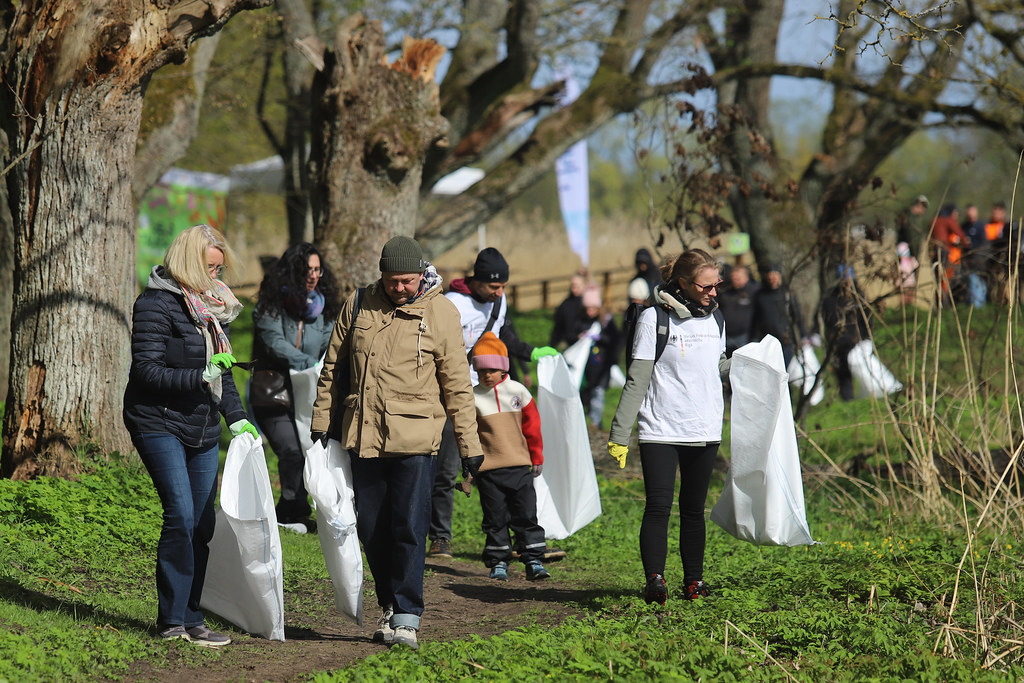
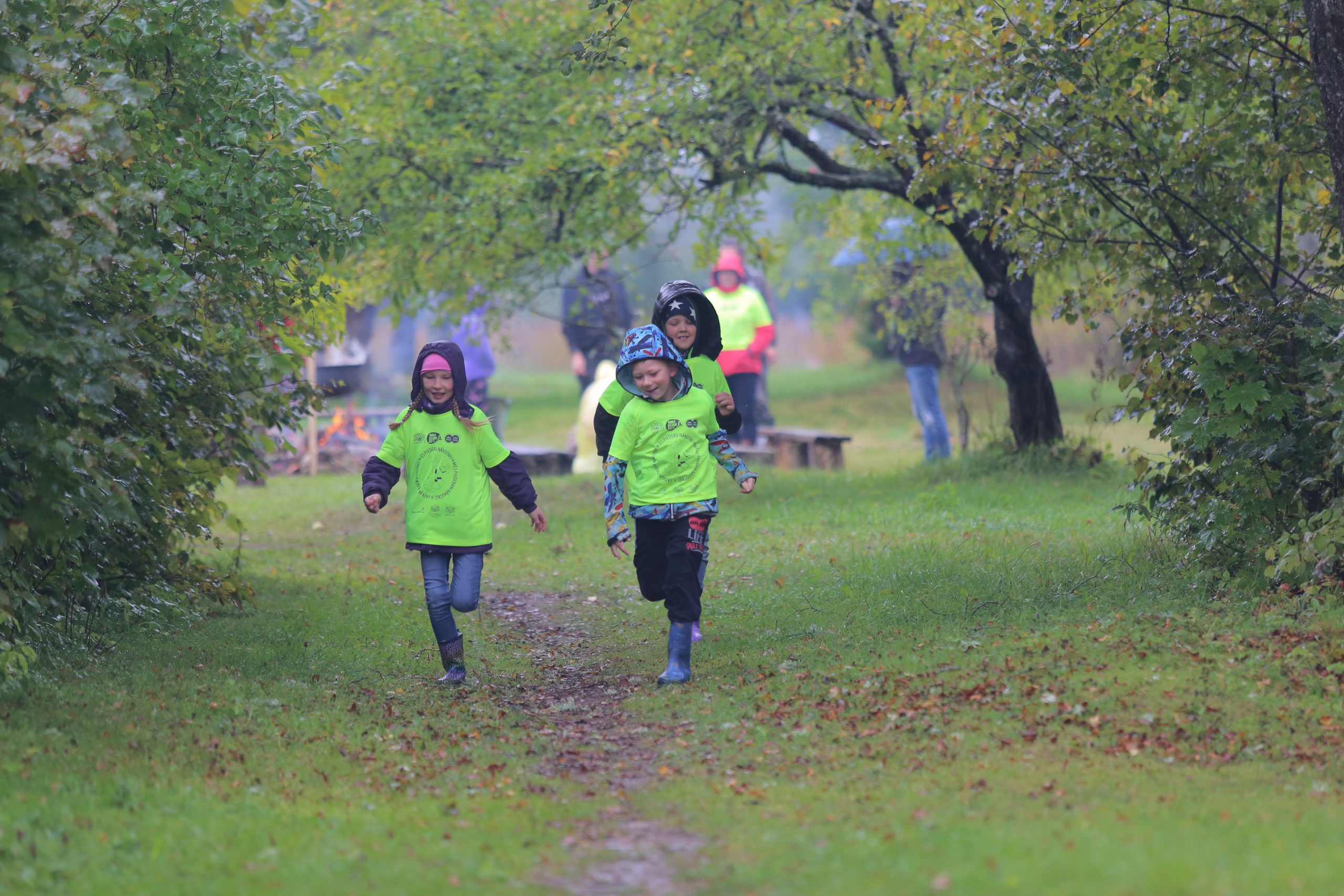
Community work involves different generations, professions, and beliefs; children, parents, and grandparents work together to create shared experiences and ensure the continuity of values. In schools, youth organizations, and centers, as well as in amateur and sports groups, the younger generation works alongside teachers and older students, learning practical skills and positive attitudes toward the environment and society.
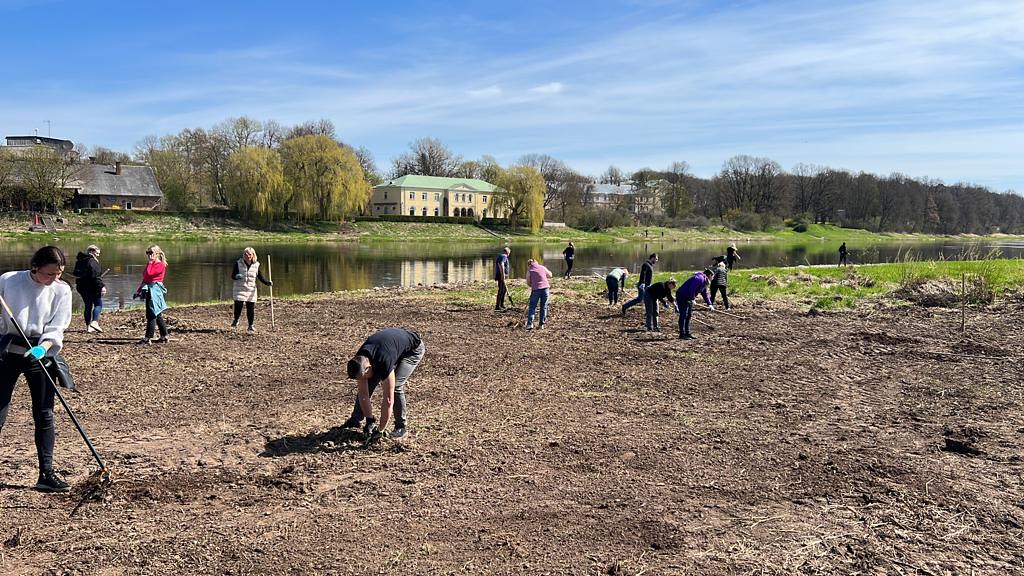
In Latvia, community work parties are particularly popular in the spring and fall. In the spring, residents organize neighborhood cleanups, and the Lielā Talka (Great Cleanup) and Forest Days take place. In the fall, harvest work parties are held in the countryside and small gardens. For diaspora communities, talkas are a symbolic way to strengthen Latvian identity and ties with Latvia.
Communities are united by common work and common values: diligence, mutual assistance, responsibility, and care for nature, fellow human beings, and cultural heritage. Talka participants are a community of both doers and attitudes where duty meets joy and work becomes a celebration. Everyone is welcome, expected, and accepted in this community.
In spring 2025, the public was called upon to share their talka stories, opening the treasure chest of the Latvian talka community. The submitted stories and the support for including the talka tradition in the Latvian Intangible Cultural Heritage List confirm that talkas are living heritage, creating a sense of community and promoting respect for nature and fellow human beings while helping to preserve cultural heritage. We will continue to explore and collect stories—this is just the beginning. Below is a glimpse into the diversity of talka stories.
In connection with the 40th anniversary of Turaida Dainu Hill, its creator, Anna Jurkāne, reminded the public that this special place was created with the help of talkas. Hundreds of people came together to carry and place boulders, clean up the surrounding area, and create a memorial site for Latvian folk songs. This joint effort became a symbol of unity and cultural heritage preservation.
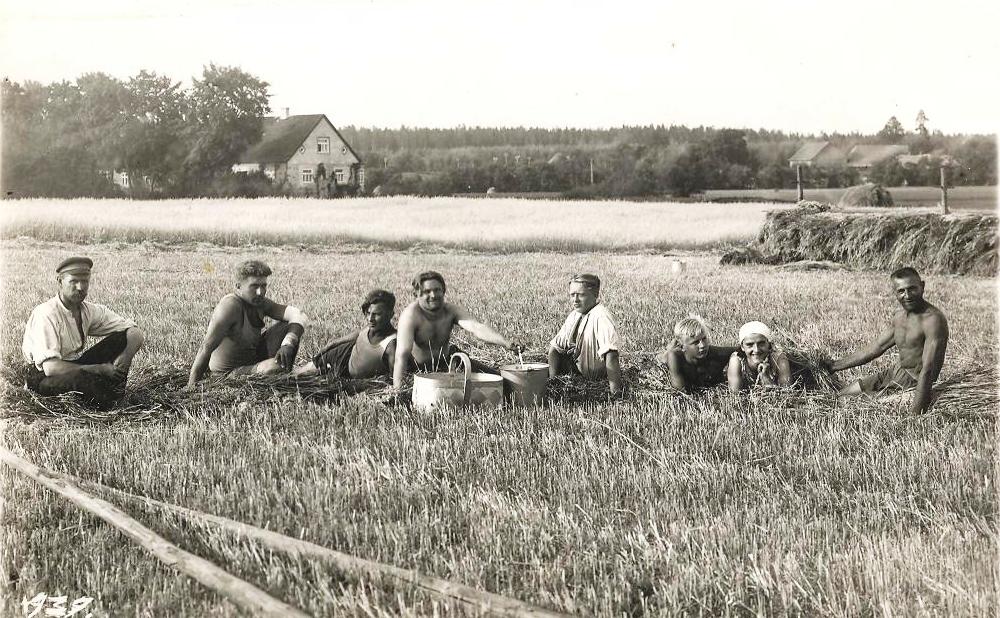
The Sāre family in Irnumi, Ainaži municipality, and the Maize family in Liepa civil parish organize annual potato harvesting talkas that bring together all generations. The Linužs family in Elderi shared their potato harvest traditions, which have been held at their family home for over 50 years. The Kārkliņš family regularly organizes hay harvest talkas in the Galgauska civil parish, inviting others to participate and share these ancient skills.
Work parties bring local residents together in many communities, strengthening their sense of belonging and promoting the preservation of local identity and cultural heritage. In Pilskalne civil parish, the Upmales mantnieki association combines the activities of a senior citizens’ club with work parties at the old Gricgale (Medņi) pub. The Mežinieku apkaimes attīstībai (For the Development of the Mežinieki Neighborhood) community in Ķekava civil parish actively improves the environment and is proud that residents of social housing participate in talkas. Residents of Rauna civil parish have long been committed to maintaining historical sites and natural areas, including the Freedom Monument, castle ruins, cemeteries, ancient alleys, and private gardens. The Ūdrīši civil parish administration of Krāslava municipality regularly organizes community cleanup events in the local area. Other organizations involved in community work include the Dzirciems and Iļģuciems neighborhood associations, the Jelgava branch of the Nacionālā apvienība political party, the Jelgava Zonts Club, the Kusa Primary School and Preschool, the Gulbene District Library, and the Flower Arranging Club at the Riga School of Natural Sciences.
In 2009, the Mazā kavalērija (Little Cavalry) movement formed in response to the global financial crisis. They express their conviction in the words of poet Imants Ziedonis: “Latvia is a wonderfully beautiful country, but beauty needs help to reveal itself.” The founders of the Imants Ziedonis Viegli Foundation started this movement. At their talkas, sporting events, concerts, shared meals, readings of Imants Ziedonis’s poetry, and “Vaidavings,” the tradition of walking along the river while singing that began in the Ape region took place after a job well done.
Latvia also has solo volunteers for whom talka is like meditation—a personal and heartfelt conversation with nature. Some volunteer daily for years, doing important environmental cleanup work and sharing their experiences on social media to inspire others. These volunteers’ stories confirm that talkas are rooted in Latvian culture as an expression of a person’s free will and experience. Talkas highlight society’s desire to live in a more beautiful, cleaner, greener, and friendly environment.
Latvians living outside of Latvia organize talkas in their countries of residence. They work together to clean up Latvian centers, embassy gardens, and memorial sites as team-building activities. Cleanup events take place everywhere from Great Britain and Germany to Canada and Spain. They also play an important role in strengthening Latvian identity.
Significance of the pirts tradition in community life
The talka tradition in Latvia is an important part of diverse communities’ lives, strengthening their sense of belonging to a place, its people, and its shared values. This tradition involves people of different generations, professions, and social groups, including families, neighborhoods, municipalities, the diaspora, schools, and work collectives, and it is a living, practical form of cooperation and mutual assistance.
The talka community experiences unity, trust, and shared responsibility. Working together promotes cooperation and socialization, strengthens relationships, and provides satisfaction. Young and old, locals and visitors, organizers and participants all take part. Those who prepare refreshments, document the event, share their experiences, or entertain others with creative, sporting, or musical activities after the work is finished are also involved.
Talkas are an expression of community initiative and self-organization. They often arise spontaneously in response to a specific need or request for help. Friends, family, neighbors, and even strangers respond to these requests. At the same time, these events can become significant social gatherings that bring together schools, parishes, municipalities, associations, and diasporas. The collective experience fosters a deep sense of belonging to a place, land, and people.
Talka communities reinforce the belief that a clean and well-maintained environment is the responsibility of every citizen, not just local governments or institutions. Thus, through practical work, the connection with nature is strengthened, the cultural landscape is preserved, and the quality of life for oneself and others is improved.
Through active involvement, practical action, and post-talk discussions, talka communities change mindsets and drive change in society’s thinking. They become initiators of organic farming, resource conservation, the circular economy, climate neutrality, the digital environment, and local community sustainability issues.
Participation in community work confirms belonging to the society in which one lives. Everyone can find their place within the talka community and contribute to a sense of togetherness, a respectful attitude toward nature, the preservation of cultural heritage, and social responsibility.
Community work events offer an opportunity to experience the present moment as active contributors while renewing collective memory and cultural heritage. Talka events have been and continue to be an integral part of Latvia’s social calendar.
Activities
The talka tradition in Latvia developed from the farming community’s need to carry out large-scale seasonal or construction work that was beyond the capabilities of a single family or household. To accomplish the planned tasks and involve willing helpers — neighbors, relatives, and friends — in the talkas, a structured cycle of activities had to be implemented. This included inviting people, sharing a meal, singing, playing music, dancing, strengthening relationships and forming new ones, thanking nature, joking, and celebrating life. These activities ensured not only practical work but also the transfer of skills and knowledge, community participation, and social harmony.
Although times change, the essence of talkas remains the same. They continue to be a living form of community cooperation based on mutual assistance, responsibility, and concern for the common good. A 21st-century talka typically consists of four stages that allow knowledge and values to be passed on through joint work, observation, and participation. This cyclical model offers the opportunity to learn practical skills and attitudes:
• Invitation: verbally, on posters, in emails, or on social networks;
• Preparation: Tools, location, time, information, and coordination of participants are provided;
• Joint work: Everyone participates, regardless of age or previous experience;
• After-talka/celebration: A shared meal, conversations, singing, sports, games, and an exchange of ideas.
Today, the talka tradition manifests itself in many forms, adapting to the needs of communities, environmental conditions, and current social issues. These expressions are structured into several thematic groups that reflect the historical roots, symbolic meaning, and function of talkas in modern society.
I. AGRICULTURAL AND SEASONAL TALKAS
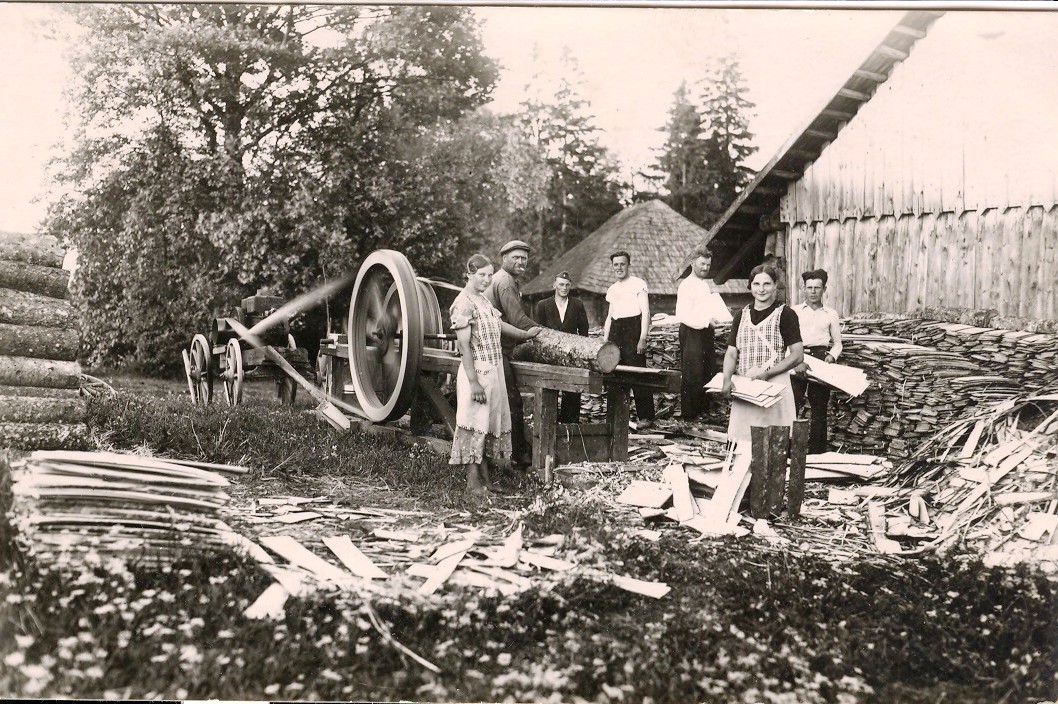
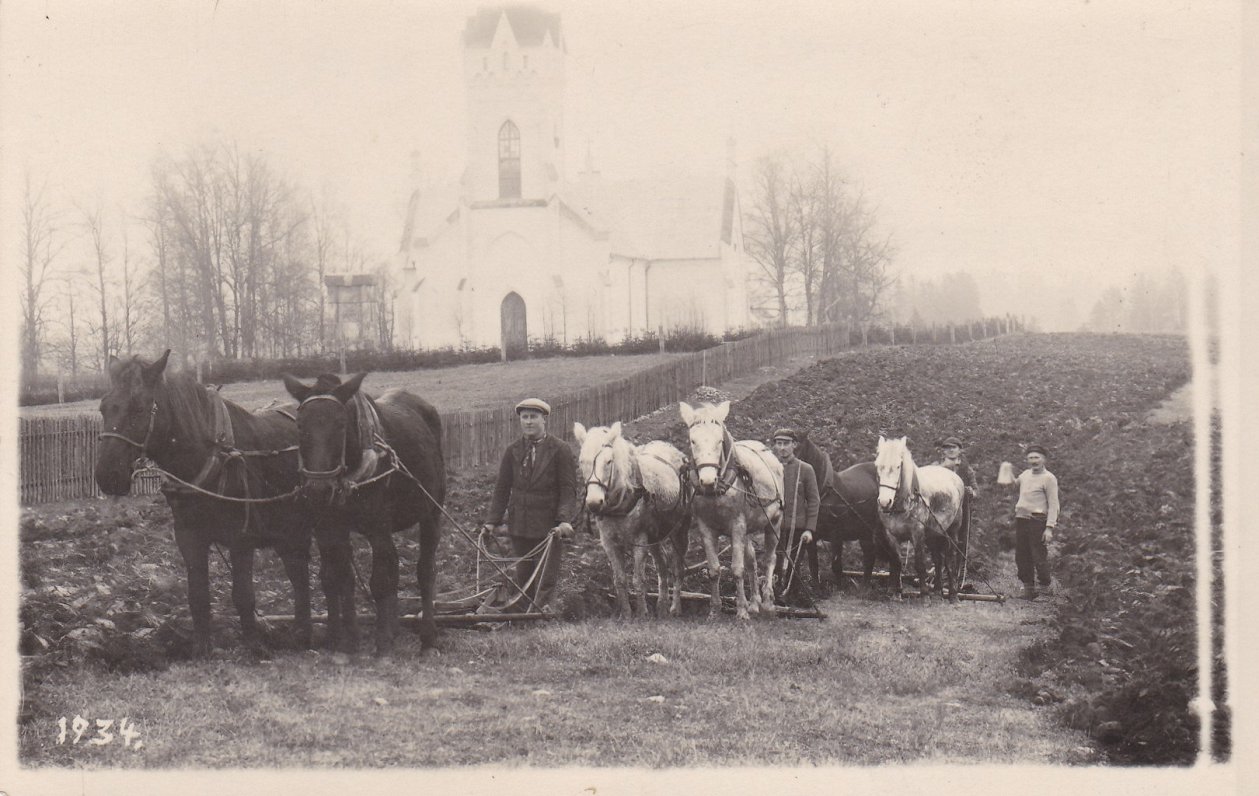
The oldest form of talkas is closely linked to an agricultural way of life, as well as to mutual assistance, which is rooted in generations of experience. These talkas often preserve rituals and celebrations. Examples include digging potatoes, haymaking, fermenting cabbage, supplying firewood, threshing flax, and harvesting grain.
II. ENVIRONMENTAL CLEANUP AND LANDSCAPING TALKAS
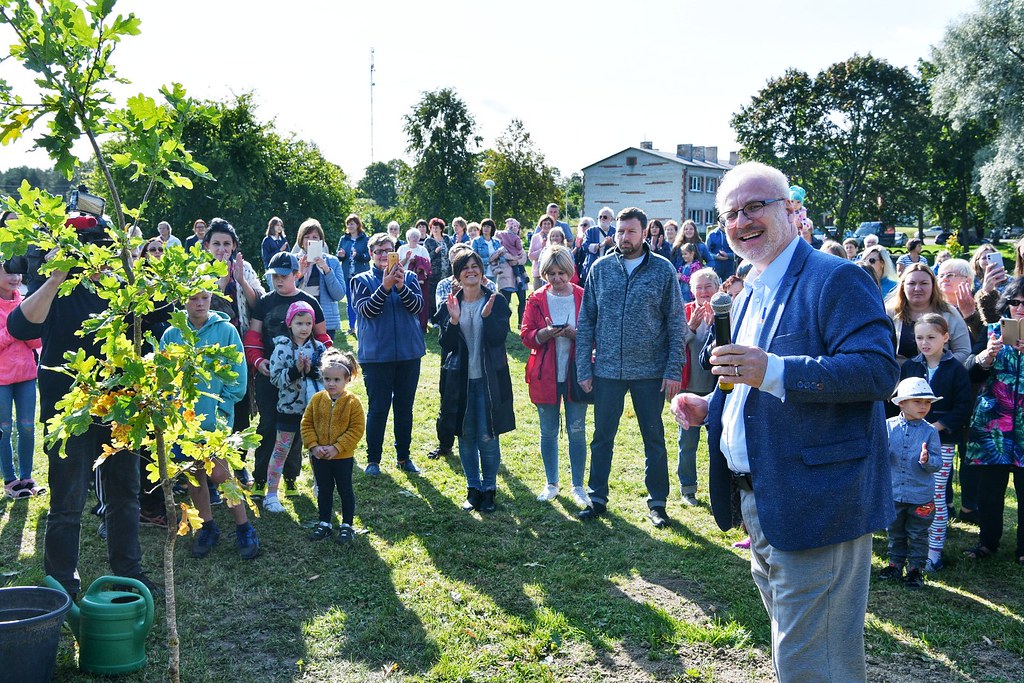
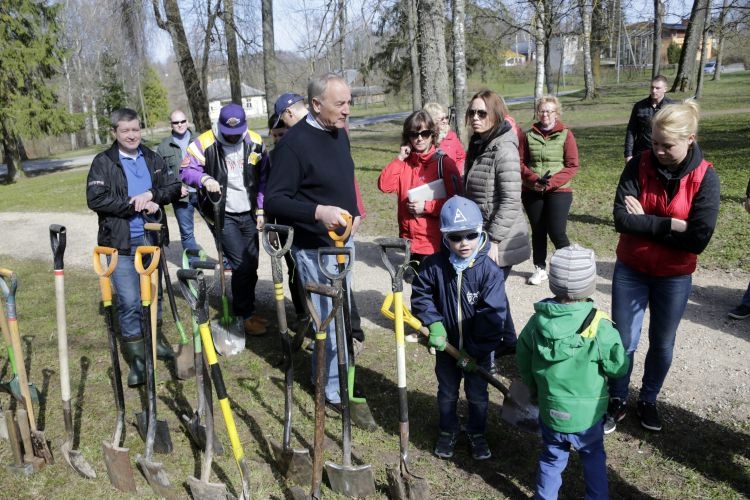
These reflect sustainable thinking and concern for the environment. They are often associated with educational and social engagement. Examples include waste collection, cleaning water bodies and riverbanks, planting trees and greenery, clearing around old trees, and improving courtyards and playgrounds.
III. TALKAS FOR CULTURAL-HISTORICAL OBJECTS AND MEMORIAL SITES
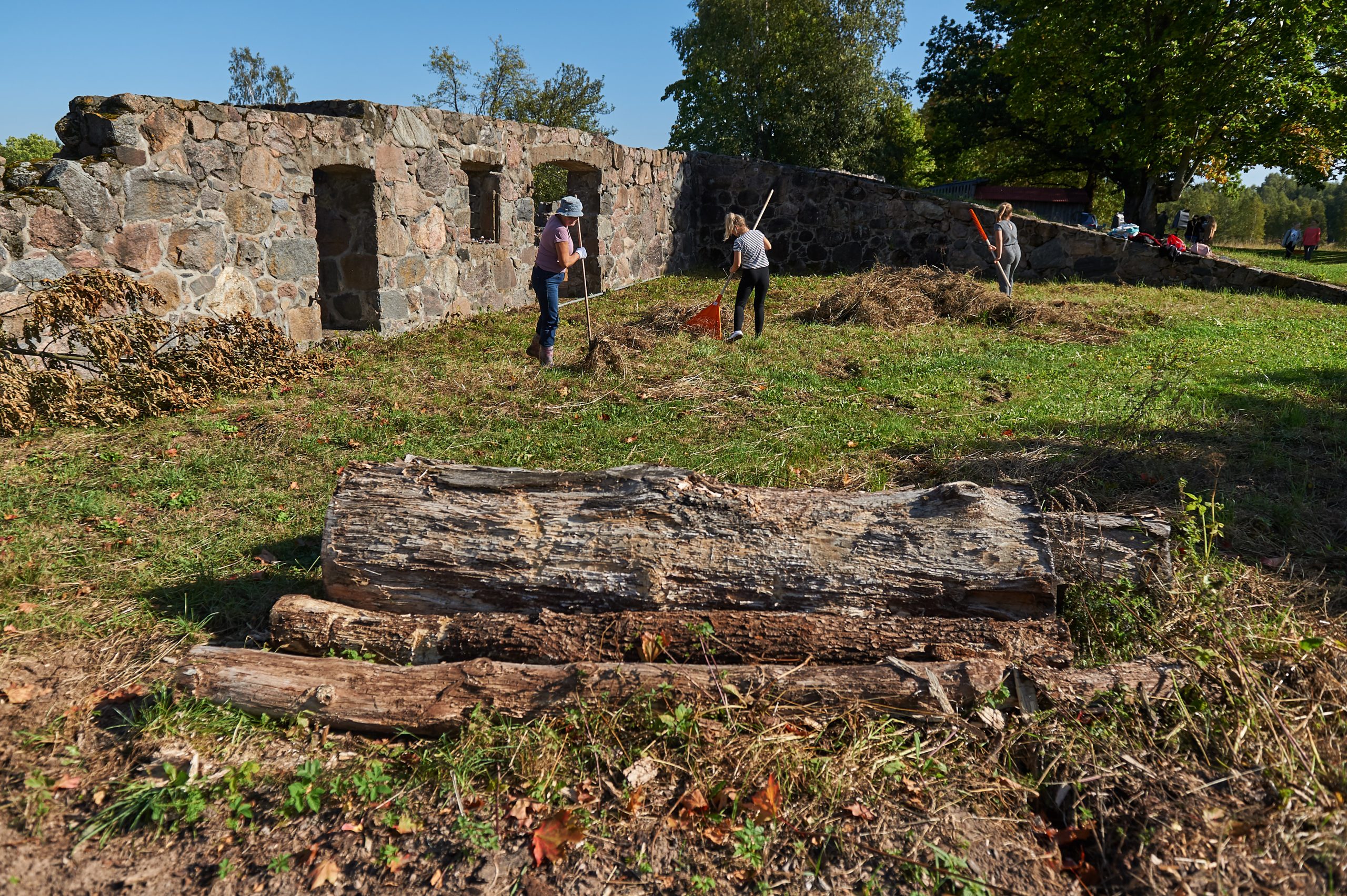
It combines practical activities with the preservation of local memory, identity, and cultural heritage. Examples include cleaning ancient burial grounds and cemeteries, improving church and open-air stage grounds, maintaining historic avenues, and restoring memorial sites.
IV. SOCIAL ASSISTANCE AND COMMUNITY BUILDING TALKAS
These work parties express solidarity and concern for fellow human beings and often arise in response to acute needs. Examples include providing assistance after natural disasters or accidents, help in moving to another residence, supporting Ukraine by making candles and camouflage nets, and assisting lonely seniors or large families.
V. THEMATIC, DIGITAL, AND EDUCATIONAL TALKAS
These strengthen civic participation, cultural values, and social cohesion in a creative way. Examples: Latvian National Library book chain, “Lung Clearing” in Mežaparks, place name, digital, cultural, idea, and voice talkas.
VI. DIASPORA AND INTERNATIONAL TALKAS
They promote the sense of belonging to Latvia and popularizes green thinking outside the country. The talkas often take place in sync with the Great Cleanup Talka in Latvia. Examples include cleaning diaspora property or Latvian cemeteries, improving embassy grounds, planting “trees of happiness,” and participating in the World Cleanup.
Beliefs, rituals, and unwritten rules
Latvian folklore, including folk songs, beliefs, riddles, and descriptions of customs, has preserved a wealth of information about the meaning, course, and symbolism of talkas.
Talkas structured the economic year and shaped the rhythm and order of community life by combining periods of intensive work with joint celebrations that marked the end of one period and the beginning of the next. Talkas were closely linked to agriculture, a cyclical sense of time, and mutual cooperation. However, traditions varied depending on the type of talka, the time of year, and the region. It is precisely this diversity that reveals the cultural and historical richness and flexibility of collective work.
1. CELEBRATIONS, THANKSGIVING, AND REWARD FOR WORK DONE
Folk songs confirm that food at a talkas was not only a practical necessity but also an expression of respect. People prepared for the arrival of a talka in a festive manner. The anticipation began a week in advance: the host made beer and the hostess prepared food. The feast served as a thank you and a reward. It also helped build the organizers’ reputation and encourage workers to return for future work parties. Dancing and revelry often took place immediately after work. A description of a talka in the Zaļenieki civil parish at the end of the 19th century illustrates this. The mowing took place at night by moonlight. They hurried with the mowing because the dancing was to begin after the work was done.
I go to talka, I run to talka,
I am wanted at the talka;
There I ate wheat bread,
There I drank some brandy wine.
Poor refreshments affected the motivation and future enthusiasm of the participants:
If God gives me more years,
I will not go next year
To pick flax at Ķiploks house:
All they had was pea soup
To be eaten with silver spoons.
The hostess’s generosity, on the other hand, was appreciated and honored:
I hope I’m granted one more year
To go to talka at this house,
Good hosts are at this house,
Plenty food and plenty drink.
The hostess’s presence was also important:
Where’s the mother of the talka?
I don’t see her anywhere.
Could she be walled in
At the bottom of the kiln?
2. SINGING AND CHANTING AS AN EXPRESSION OF APPRECIATION
Songs were an essential part of the talkas. They maintained the spirit of work, structured the course of events, and allowed for humorous or evaluative comments. Singing fulfilled emotional and social functions; both participants and organizers sang. In Latgale, there was even a special repertoire of talka songs, and the quality of a talka was judged by whether neighbors could hear the singing.
Talka ate and talka drank,
The talka mother turning sad:
They ate a lot, they drank a lot,
But they didn’t work a lot.
3. ROLES, RITUALS
The most important person was often the talka mother, but there were other women who led the collective and organized the rhythm of work. Researcher Janīna Kursīte emphasizes that women’s active participation and leadership roles in talkas are not accidental but are closely related to fertility symbolism. In the manure talkas of northern Latgale, the division of roles was even more detailed: cart driver, climber, digger, etc. This aspect of hierarchy and division of duties remains in today’s talkas and helps perform the work more efficiently and quickly.
Various rituals are associated with the talka. Among the ancient traditions, the imitation of animal sounds recorded in Northern Latgale and the rolling of the hostess around the cleaned barn are notable. One of the most frequently mentioned in folklore was driving away Jumis, which symbolically concluded grain harvest. In mythology, Jumja is a fertility deity expressed in nature as two ears of grain or other fruits that have grown together. There is also a traditional Jumis symbol that was carved or cut into building decorations. Rituals confirming Jumis’s presence include tying the last ears of grain into a sheaf or wreath and decorating the hostess with a Jumis or Jumis wreath. Jumis was then stored until the following year.
Ai, Jumīti, okūtīti,
Gon leigovi druviņāi.
Leigoj munā klietiņāi
Da cytaji vosarai.
The last sheaf was kept until the next harvest. It was used to predict the future and human destiny. “The last ears of grain in the field are tied into a sheaf and counted. If there is an even number, the reaper will find a life partner. The sheaf was threshed, and if insects jumped out, it meant that one must leave home. If not, one must stay.” Fortune-telling also took place during flax harvesting. “At the end of the day, unmarried girls close their eyes and pick flax with one hand. Then, they count. If the stalks are in pairs, they will get married that year. If not, they will remain unmarried.”
These gatherings were opportunities for young people to meet and get to know each other, and to choose their future life partners. This is why some of the games symbolized the promotion of collective fertility. For instance, one of the leading women would carry a stebere, a pole symbolizing a phallus, and the boys tried to obtain them from the girls to the accompaniment of songs.
4. UNWRITTEN RULES OF PARTICIPATION AND BEHAVIOR
The talka rules were unwritten but well known, as evidenced by beliefs, songs, and customs passed down through generations. Each participant was expected to contribute, and diligence, mutual respect, generosity, and a sense of humor were highly valued. The principle of reciprocity was also important—if you help others, you will get help when you need it.
The talka was also a work parade, a competition, and an organizational event. The talka mother and the young women of marrying age were judged on their work skills, suitability for work, diligence, amount of work done, hospitality, and cleanliness of the house.
Several elements of the tradition are still found in modern talkas, such as a shared meal, jokes, starting the talka with a song or musical performance, and thanking the participants. These elements indicate the sustainable presence of the tradition in contemporary culture. In the past and today, a positive response is expected when people are invited to participate in a talka. Tasks are divided according to ability, and talkas are organized with respect for participants, work, and weather conditions. After a job well done and celebrations, a heartfelt farewell follows. This is not only a gesture of courtesy but also part of a cyclical flow: gratitude for the time spent together and hope for a reunion at the next talkas.
Good-bye and farewell,
This eve’s hostess;
Tomorrow will be a new day for me.
I will have a new hostess tomorrow.
5. PERCEPTION OF THE ENVIRONMENT AND AESTHETIC SENSE
Talkas have always been associated with the desire to tidy up and beautify the environment — making it not only functional, but also visually and symbolically attractive. Latvian folk songs and traditions reveal a close connection between a strong work ethic and an aesthetically pleasing environment. A clean yard, neatly stacked haystacks, and weeded flower beds were indicators of order and symbols of self-respect and prosperity. The belief that the environment should serve practical and visual purposes lives on in modern community work initiatives, such as planting flowers and trees, restoring benches, maintaining landscapes, and renovating cultural and historical sites.
Inheritance and transmission
The talka tradition is a living, intangible cultural heritage that is constantly recreated and passed on to future generations. Community work strengthens the sense of belonging, promotes mutual respect, and serves as a tool for community building and realizing ideas in families, among neighbors, in educational institutions, work collectives, the diaspora, and elsewhere.
Each generation adapts and adjusts the tradition to its own needs. Former harvesting and threshing traditions have evolved into environmental cleanups, tree planting, cultural and historical site improvements, and social support initiatives. While the form and content of talkas are changing and some traditional elements are disappearing or transforming, the most important aspects remain: mutual assistance, respect for nature and work, responsiveness, and satisfaction with what has been accomplished together.
This tradition is mainly passed on informally through doing, participating, and sharing experiences across generations. Every participant continues this cultural phenomenon, regardless of their contribution — whether it be work, preparing refreshments, playing music, or simply being present — often without realizing its historical depth and symbolic meaning. The tradition becomes an experiential value embodied in collective action.
The talka tradition is flexible yet enduring. It is not institutionalized; no legal structure is required, only a desire to cooperate. This form of voluntarism and self-initiative is evident in talkas in courtyards of multistory apartment buildings, family potato harvests, and nationwide campaigns. Even in communities without formal structures, people understand how to work together, show respect, and express gratitude. This knowledge is passed on through example and action-based participation. The absence of some historical elements at some work parties, such as songs or games, does not diminish their essence or place in contemporary culture.
Today’s media and social networks significantly expand the possibilities for passing on traditions. They document traditions and make them accessible and recognizable to new generations. Press publications, photo galleries, video stories, and social media allow everyone to witness or participate in traditions. By sharing their experiences, communities strengthen the vitality of traditions in contemporary forms.
Talkas in Latvia have been featured in the media for over two centuries, appearing in essays, chronicles, and newspapers, which provide evidence of societal and environmental development. From 1790 to 2025, nearly 220,000 articles about talkas were published in the press, confirming the presence and significance of this tradition throughout different eras.
In the digital age, media types are changing. In the first five months of 2025 alone, the Great Cleanup was covered 1,877 times in Latvia’s leading media: There were 536 publications in regional and municipal publications, 234 in national media and internet portals, 160 radio reports, 82 television stories, and 865 social media posts.
Fourteen thousand viewers watched the cleanup in Strazdumuiža on TV, 11,000 people participated in the Mežaparks talka kick-off event, and an average of 259,000 listeners tuned in to StarFM's “Ideju Talka” every Wednesday. The hashtags #lielatalka, #esamdaba, #esamkopā, and #esamLatvija were actively used on social media. The talkas were covered on Facebook, Instagram, TikTok, X (Twitter), YouTube, and Flickr. Embassies and partners also shared information.
This multi-channel coverage confirms that talka remains one of the strongest forms of public engagement and cultural tradition in Latvia.
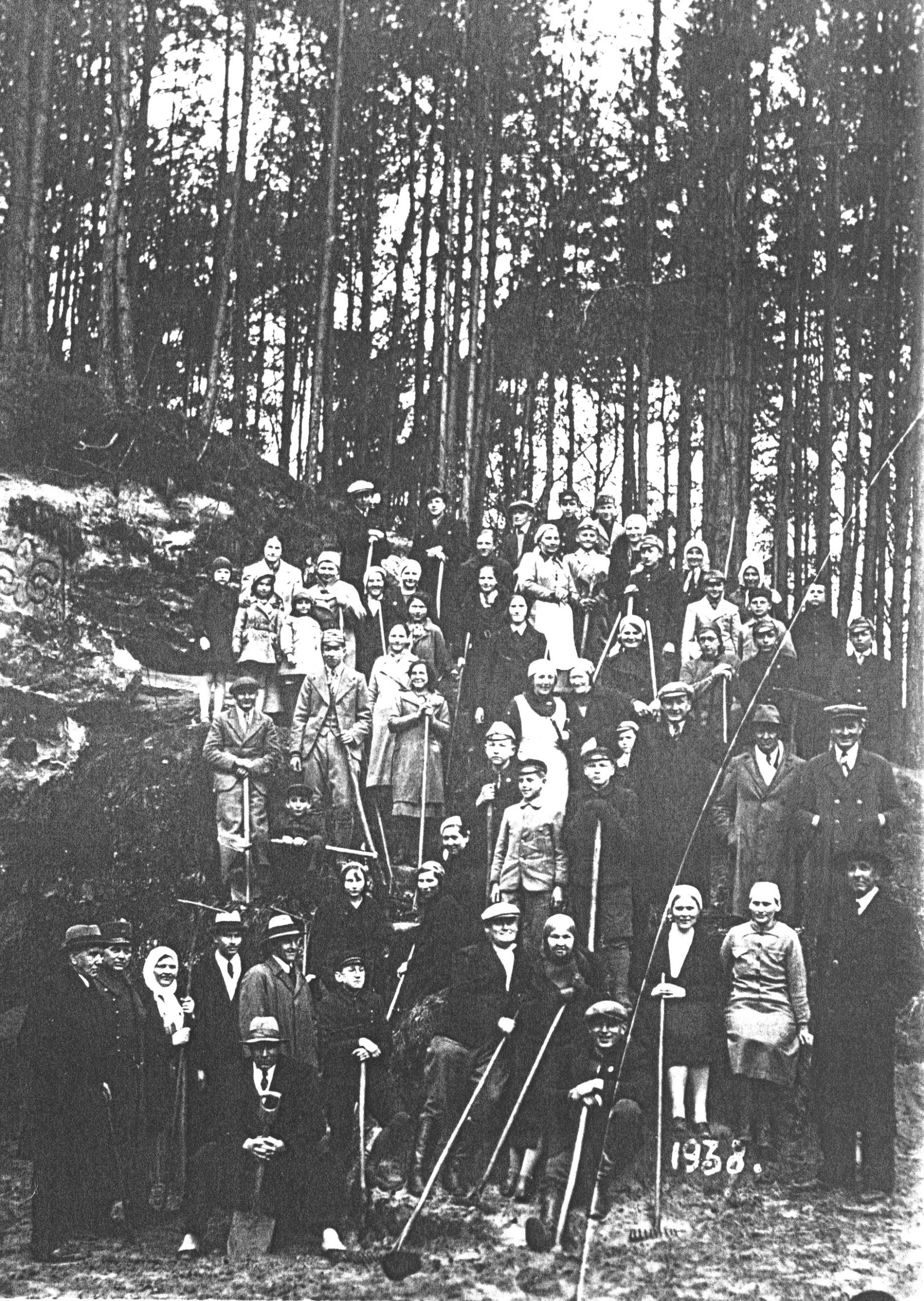
Visual documentation of traditions is not just a modern phenomenon. Since the invention of photography, talkas have been preserved in family albums, museums, and archives. These visual materials have become an important part of cultural heritage in both research and as an emotional link to the past.
Talkas are also richly reflected in Latvian literature, where they are often depicted as an integral part of traditional life. Examples include Andrejs Upīts’s Sūnu ciema zēni (The Boys of Moss Village), Jānis Klīdzējs’s Cilvēka bērns (Child of Man), Edvards Virza’s Straumēni, Reinis and Matīss Kaudzīte’s Mērnieku laiki (In the Days of the Land Surveyors), and Jānis Jaunsudrabiņš’s Baltajā grāmatā (The White Book), Anna Brigadere’s Dievs. Daba. Darbs. (God. Nature. Work.), and Jānis Akuraters’s Kalpa zēna vasara (The Farmhand’s Summer).
Talkas are also described in other significant works, such as Rūdolfs Blaumanis’s “Purva bridējs” (In the Marsh), Sudrabu Edžus’s “Dullais Dauka” (Crazy Dauka), and Jēkabs Janševskis's Bandavā (In Bandava) and Dzimtene (Homeland), Vilis Lācis’s Zvejnieka dēls (Fisherman’s Son), Ilze Indrāne’s Lazdu laipa (The Hazel Footbridge) and Ūdensnesējs (The Water Carrier), Vizma Supe and Dace Markus’s Bārnu dīnas pīminut (Remembering Childhood), and Lūcija Ločmele’s Saulessvece (Mullein). These works, both literary and emotional, document how talka has shaped the rhythm of Latvian life and relationships, making it an integral part of the country’s cultural heritage.
Talkas also live on in film adaptations, such as Jānis Streičs’s films Cilvēka bērns (Child of Man) and Limuzīns Jāņu nakts krāsā (Limousine in the Color of Midsummer Night); Voldemārs Pūce’s Mērnieku laiki (The Days of the Land Surveyors); and animated films for children, including Roze Stiebra’s Laimes lācis (The Good Luck Bear), and the film adaptation of Sūnu ciema zēni (The Boys of Moss Village). Literary works and their film adaptations serve as an aesthetic and emotional bridge through which the tradition is passed on to future generations.
At their core, talkas have always been, and continue to be, bearers of values. This living tradition is naturally passed on through helping others, spending time together, fostering a sense of belonging, and feeling satisfied with what has been accomplished. The tradition lives not only in works but also in people’s stories, memories, films, and books; in cultivated places and songs; and in skills and attitudes that form a bridge between the past, present, and future.
History
TALKAS BEFORE THE 20TH CENTURY
The talka tradition in Latvia has its roots in ancient forms of mutual assistance observed in pre-industrial societies. The earliest period of talka history, before the 19th century, must be studied in depth to understand the variety and development of this form of cooperation.
The development of talkas was also influenced by the corvée system, in which peasants performed tasks for landowners in exchange for the right to use the land. Unfortunately, the surviving evidence about such talkas is not inspiring. “The manor often organizes peasant talkas—corvée labor. The heaviest work is in the threshing barns. The threshed grain is placed in large winnowing sieves and winnowed in the wind. Each group of workers is supervised by a foreman with a stick.”
Although corvée labor was forced labor, it also fostered a sense of community and mutual assistance. This sense of community later became a means for peasants to maintain their independence and manage the land through joint efforts. Within the agrarian structure of the 19th century, talkas were often organized to combine forces for large-scale agricultural or construction work. Smaller-scale work was carried out within the family, while talkas were organized for larger jobs or in emergency situations.
However, talkas played a greater role than just carrying out large-scale work. They became an integral part of farmers’ economic and social lives because they provided an opportunity to meet more often and pass on skills, customs, and good farming practices from generation to generation. The rhythm of the talkas was closely linked to annual celebrations. They reflected the course of the economic year, concluding one work cycle and opening the door to the next. This created a predictable and logical rhythm of community life.
As Kārlis Ruks, a Piebalga native, writes, “Potato digging, grain harvesting, and hay mowing talks were organized only in exceptional cases—death, serious illness, fire, etc.—when work was delayed on the affected farm. These talkas were a way of helping a neighbor in need, and they did not have to be repaid. Others did, however.”
There are also records of a type of work party that has disappeared today. “Even now, large flax growers organize special work parties in the spring called supraga. Participants in the talka arrived with their spinning wheels to help spin unspun yarn, allowing the women of the household to focus on other spring chores. Here, too, the participants received their reward—a feast and dancing.”
The project “Recognition and Research of Talka Traditions in the Daugavpils Municipality,” implemented by the Skrinda Family Museum, also confirms the importance of talka in social life and rural work. The project compiles memories of various types of talkas. The most often mentioned are manure and threshing talkas; hay and potato harvesting talkas are mentioned less often. The study also reveals emotional and everyday aspects of living memories. For example, one story mentions a romantic moment during haymaking: “The girl slid down to the boy she liked, but if an unattractive boy was waiting for her at the bottom, she threw a pitchfork at him.”
In addition to oral testimonies, the project identifies visual heritage, such as photographs and film documents, which are included in the exhibition and documentary film. These materials confirm that talkas were not only significant practical works but also important social and cultural events that people wanted to immortalize and remember.
TALKAS IN THE 20TH CENTURY
After Latvia declared independence in 1918 and, especially, after the agrarian reform that led to the creation of more than 40,000 new farms, talkas became an important support mechanism for new farmers. After World War I and the War of Independence, the land was depleted and many farms were destroyed. Talkas provided a practical way for farmers to collaborate in restoring buildings, plowing fields, clearing stones, and starting to farm again. This process also involved transferring knowledge and experience, which helped young farmers strengthen the new state and its civil society.
Even as more and more people moved to cities, talkas did not lose their significance. In the 1930s, leader Kārlis Ulmanis popularized tree planting as a symbolic and practical initiative to strengthen social unity and national self-confidence. These community workdays, in which schoolchildren actively participated, emphasized the creation of a scenic environment, the importance of ecology, and economic development. They were called Forest Days. These events promoted responsibility toward the land, the country, and the future and became very popular. In 1935, 256,000 people participated in Forest Days, planting 1.4 million trees and shrubs. These tree-planting events, which began during Ulmanis’s time, continue to this day. Every spring, Latvijas Valsts Meži (Latvian State Forests) invites the public to participate in Forest Days. These events promote respect for the cultural landscape and understanding of the importance of forests in Latvia’s identity and economy.
Collectivization and the introduction of agricultural machinery after the Second World War brought an end to the previous tradition of farmers’ work parties. During the Soviet era, talkas took on a new, often compulsory form. In the fall, adults, schoolchildren, and students participated in harvest campaigns on collective and state farms, helping to harvest potatoes, beets, carrots, apples, and other agricultural products. These activities symbolized the necessity dictated by centralized management more than mutual assistance. Nevertheless, some traditional elements and community ties remained in the work parties.
In addition to the autumn harvest, Soviet ideology introduced spring subotniks, which were voluntary workdays for the benefit of society but were often compulsory in reality. These events were presented as examples of collective enthusiasm and work ethic, symbolically represented by the image of Lenin. The propagandistic nature of subotniks replaced the voluntarism of talkas with ideological obligation.
As a result, the traditional cultural and social content of talkas was lost during the Soviet era. However, some values remained: working together, the rhythm of everyday life, and satisfaction with a job well done. People often remember these events as being associated with shared meals, songs, musicians, and informal conversations. This allowed talkas to retain their significance as a community experience despite the political overlay.
The spirit of volunteerism was revived in the 1970s thanks to the tree-saving talkas initiated by the poet Imants Ziedonis. This initiative became an important campaign for preserving cultural and natural heritage that took place for more than two decades under Soviet rule. It involved cultural workers, environmentalists, young people, and intellectuals. Identifying and caring for big, old trees became a peaceful yet purposeful form of resistance against ideological pressure.
In the early 1980s, the Creative Youth Club, led by Arvīds Ulme, became involved in the volunteer movement as well. The cleanup campaigns that the club organized for churches and monuments laid the groundwork for the establishment of the Environmental Protection Club in 1987. This organization is now the oldest of its kind in Latvia. These initiatives confirmed the power of cleanup campaigns as a form of self-initiative and civic participation.
Cleanups organized by intellectuals and environmental activists reawakened collective memories of ancestral values, drew public attention to environmental issues, and signaled the revival of national self-awareness.
TALKAS IN THE 21ST CENTURY
After Latvia regained independence, the tradition of talkas gained new momentum. People regained their property, restored their farms, and cleaned up their surroundings. Talkas once again became a common practice. However, cleaning the public environment was still considered the responsibility of local governments or janitors, so these talkas were not widespread initially.
To change society’s attitude toward shared spaces and responsibilities, new public initiatives formed in the early 2000s. One of the first was the “Olympic community cleanup,” in which athletes cleaned their surroundings. Vita Jaunzeme organized these cleanups and later became the leader of the Great Cleanup movement.
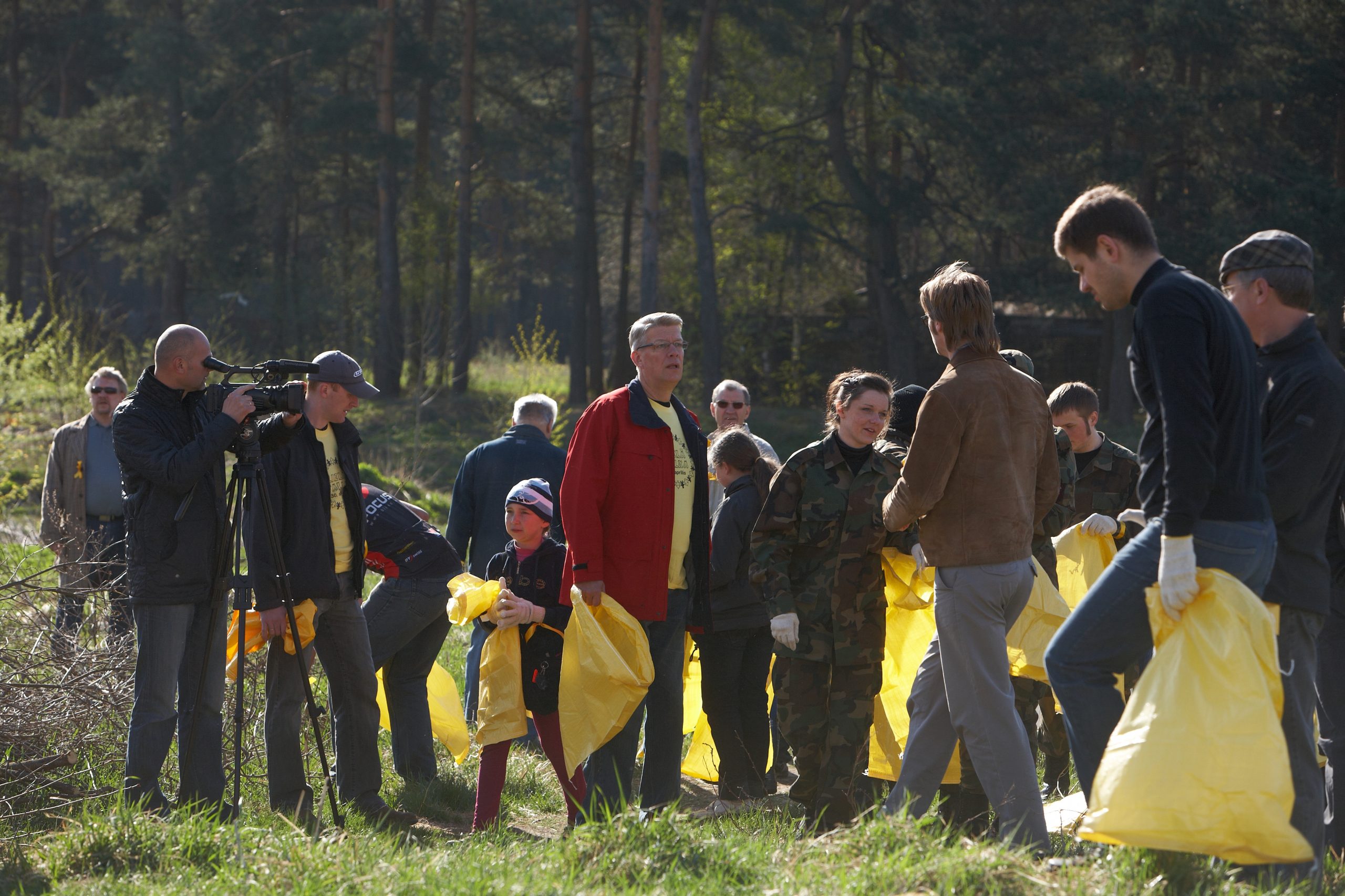
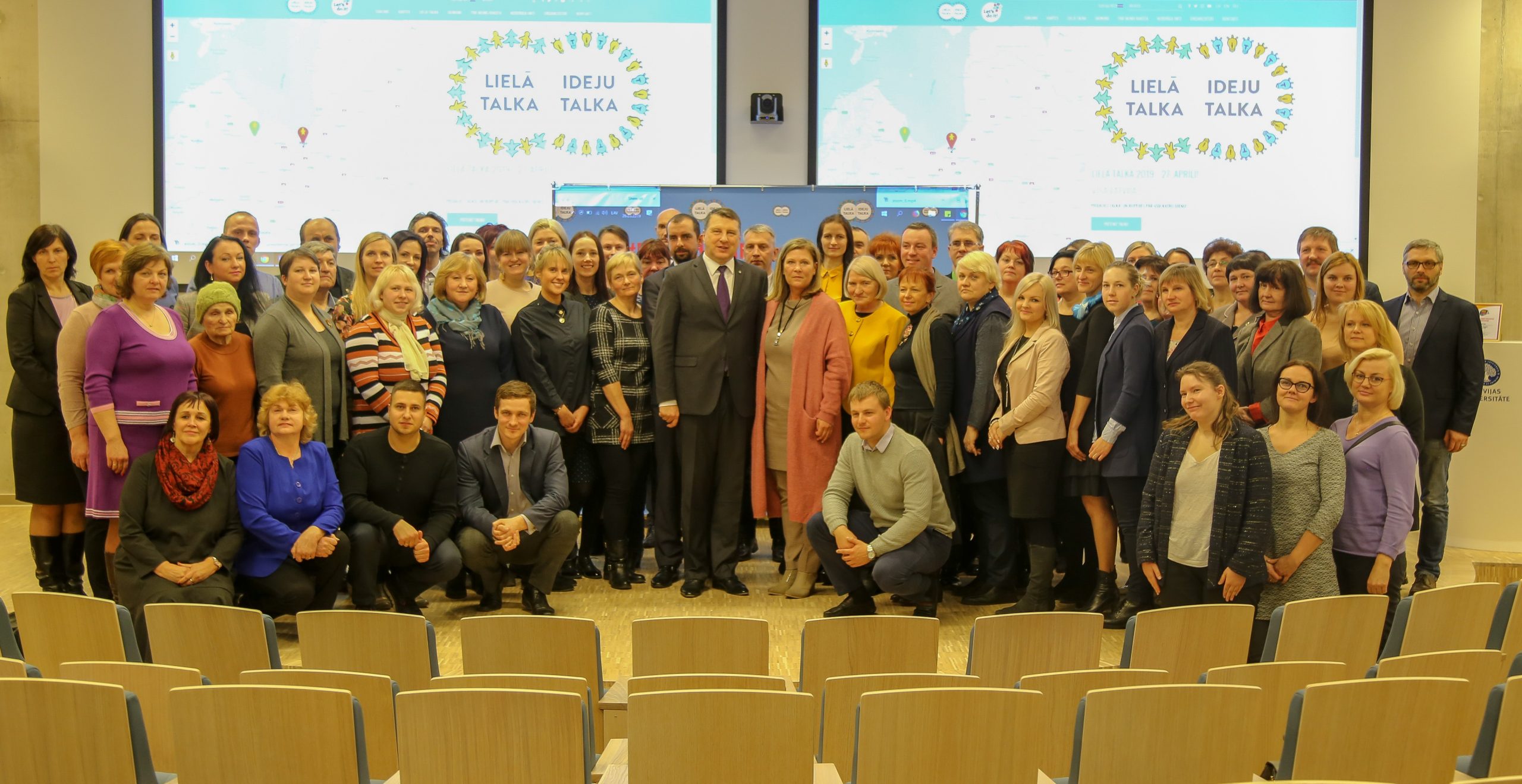
In 2008, in preparation for the 90th anniversary of the founding of Latvia, Lithuania, and Estonia, the idea for a joint Baltic cleanup campaign was born. Inspired by the Estonian example, writer Anna Žīgure proposed bringing the Lielā Talka movement to Latvia and invited the president to become its patron. Valdis Zatlers supported the initiative, personally participating in the cleanups and encouraging widespread public participation.
Since then, Lielā Talka (Great Cleanup) has become the most visible and comprehensive cleanup movement in Latvia. It has developed from a one-time event into an annual, sustainable social movement with approximately 120,000 participants each year, according to data from the Pēdas LV association. These participants include diaspora communities. The strength of the Great Cleanup lies in its annual responsiveness, sustainability, and ability to reach new social groups.
The Great Cleanup’s goal goes beyond waste collection. It promotes environmentally friendly thinking, civic participation, solidarity, and community cohesion while raising awareness of sustainable development issues. Over time, the amount of waste collected has decreased, indicating positive changes in societal habits. This enables the Great Cleanup’s activities to focus on maintaining the cultural landscape, improving the environment, and preserving cultural spaces.
Memoranda of cooperation with the Song Festival Association and the Latvian State Radio and Television Center have added a digital dimension to the culture of talkas, establishing it as one of the most vocal and unifying traditions in modern Latvia.
Nowadays, talkas encompass more than environmental cleanups; they also include agricultural work, restoration of cultural and historical objects, social initiatives, and community building. Talkas are attended by local residents, members of the diaspora, and tourists. At choir concerts, folklore events, museum programs, and other cultural activities, talkas offer educational and practical experiences where participants can learn about heritage and take part in activities such as planting trees, harvesting hay, and gathering crops.
As heritage researcher Tim Winter emphasizes, heritage is not static but dynamic, rooted in societal development. The tradition of talkas in Latvia perfectly illustrates this concept—it remains a living, adaptable, and multifaceted practice that fosters a sense of belonging to the community and cultural space. Even in the 21st century, talkas retain their practical, symbolic, and social significance, becoming one of the most visible expressions of intangible cultural heritage in Latvia.
Additional Information
The compiled sources of information not only provide a factual basis, but also confirm how multi-layered and multi-voiced the talka tradition is – in research, art, and the collective memory of society. These sources clearly show that talkas are not only a living intangible cultural heritage, but also an essential part of cultural identity and social cohesion. Below is a list of sources where you can learn about the skills, customs and events of the talka tradition:
BOOKS AND ACADEMIC PUBLICATIONS
A. Beitāne. Vēlīnās izcelsmes vokālā daudzbalsība latviešu tradicionālajā mūzikā (Late-Origin Vocal Polyphony in Latvian Traditional Music). Riga: LU LFMI, 2009.
Etc.
Burzyńska, K. (2020). The act of ‘Talka’ in historic preservation discourse in contemporary Latvia. Builder, 22–26.
Jurjāns, A. (1912). Latvju tautas mūzikas materiāli IV. Rīga: A. Grothuss.
Kursīte, J. (2018). Dainu kodekss. Rīga: Rundas.
Muktupāvels, V. (1989). Dindaru, dandaru: latviešu rotaļas un spēles. Rīga: Avots.
Starcs, P. (1939). Latvijas agrārreformas tautsaimnieciskie rezultāti. Latvijas lauksaimniecības kamera.
Vītoliņš, J. (1958). Darba dziesmas. Rīga: Latvijas Valsts izdevniecība.
Winter, T. (2014). Heritage studies and the privileging of theory. International Journal of Heritage Studies, 20(5).
INTERNATIONAL DOCUMENTS AND POLICY FRAMEWORKS
UNESCO. (2003). Convention for the Safeguarding of the Intangible Cultural Heritage.
https://ich.unesco.org/en/convention
United Nations. (2015). Transforming Our World: the 2030 Agenda for Sustainable Development.
https://sdgs.un.org/2030agenda
WEBSITES AND DIGITAL RESOURCES
Augšdaugavas novads. Apzinātas senās talku tradīcijas Augšdaugavas novadā.
https://www.augsdaugavasnovads.lv/novads/aktualitates/jaunumi/apzinatas-senas-talku-tradicijas-augsdaugavas-novada
Cerbule, I. (2022). Alejas un stādījumi pie ceļiem senāk un tagad. Latvijas Valsts ceļi.
https://lvceli.lv/celu-vestures-lappuses/alejas-un-stadijumi-pie-celiem-senak-un-tagad/
Dainuskapis.lv. https://www.dainuskapis.lv
Eniņš, G. (2024). Atgriezos Ziedoņa laikā un telpā. LA.LV.
https://www.la.lv/guntis-enins-atgriezos-ziedona-laika-un-telpa
Garamantas.lv. LVU Filoloģijas fakultātes Neklātienes nodaļas vākums.
https://garamantas.lv/lv/collection/886533/LVU-Filologijas-fakultates-Neklatienes-nodalas-vakums
LVportals.lv. (2019). No klaušām un ‘subotņikiem’ līdz brīvprātīgām talkām.
https://lvportals.lv/norises/303798-no-klausam-un-subotnikiem-lidz-brivpratigam-talkam-2019
LSM (2025). Ruka, E. Vai zini, kā piebaldzēni rīkoja talkas?
https://www.lsm.lv/raksts/dzive--stils/vesture/10.05.2025-vai-zini-ka-piebaldzeni-rikoja-talkas.a597356/
Mammamuntetiem.lv (2025). Talkas spēks: Vai zināji, ka Turaidā esošais Dainu kalns radīts ar talcinieku rokām? Pieejams:
https://www.mammamuntetiem.lv/maja-un-darzs/vides-izglitiba/62402/talkas-speks-vai-zinaji-ka-turaida-esosais-dainu-kalns-radits-ar-talcinieku-rokam
Meži Latvijā laiku lokos un Meža dienu fenomens. LU Akadēmiskā Dzīve, Nr. 55.
https://www.apgads.lu.lv/fileadmin/user_upload/lu_portal/apgads/PDF/Akademiska_Dzive/Akademiska-Dzive_55/adz-55-06-Daugaviete.pdf
Periodika.lv. Latvijas Nacionālā Digitālā bibliotēka.
https://periodika.lv/#searchResults:%23talkas
Satori.lv. Šteinerts, M. Ja ne mēs, tad kurš? Talka: Izvēle vai pienākums.
https://satori.lv/article/ja-ne-mes-tad-kurs-talka-izvele-vai-pienakums
Tezaurs.lv. Talka. https://tezaurs.lv/talka:1
Tidy Towns (2017). Spirit of Tidytowns – SuperValu Tidytowns Competition.
https://www.tidytowns.ie/about-us/spirit-of-tidytowns/
Tradicionālās kultūras digitālais arhīvs. Meklējums: “Talka”. Trad.arhīvs.
https://tradarhivs.lv/search/talka
UNESCO Latvijas Nacionālā komisija. (2021). Mēslu talka Ziemeļlatgalē / Tolku bolss [Video].
https://www.unesco.lv/lv/media/187/download?attachment
World Cleanup Day. Get involved.
https://www.worldcleanupday.org/get-invol
United Nations. World Cleanup Day. https://www.un.org/en/observances/cleanup-day
AUDIO, VIDEO
YouTube. (136) Īstenots projekts “Talku tradīciju apzināšana un izpēte Daugavpils novadā”.
https://www.youtube.com/watch?v=qozzGdpHkPw
Replay.lsm.lv (2017). Talkā iemu, talkā teku, talkā mani aicināja...
https://replay.lsm.lv/lv/klausies/ieraksts/lr/92464/talka-iemu-talka-teku-talka-mani-aicinaja
Replay.lsm.lv (2024a). Talka liela, talka maza, talka bēdu padarīja...
https://replay.lsm.lv/lv/klausies/ieraksts/lr/196592/talka-liela-talka-maza-talka-bedu-padarija-skan-talkas-d
Replay.lsm.lv (2024b). Talka nāca sētiņā.
https://replay.lsm.lv/lv/klausies/ieraksts/lr/197267/talka-naca-setina-rudens-ir-istais-laiks-runat-par-darba-dziesmam
Latvijas simtgades stāstu raksti (2017). Kartupeļu talka – LR2 raidījums, I. Štrāla.
https://lr2.lsm.lv/lv/raksts/latvijas-simtgades-stastu-raksti/kartupelu-talka.a92582/LatvijasRadio2
Masters
While every participant in a talka is important, almost every community has individuals whose contributions to organizing, leading, and inspiring talkas are particularly noteworthy. These individuals are the “mothers” and “fathers” of today’s talkas — the people who take the initiative, organize, invite, and inspire. These people are usually well known in their local environment but rarely come to the attention of the wider public.
The core of the volunteer community consists of active members of families, clans, neighborhoods, communities, and municipalities—amateur artists, teachers, cultural tradition keepers, diaspora enthusiasts, and Great Cleanup coordinators. These individuals share their experience, help attract new participants, and encourage and maintain the vitality of the movement.
While preparing this application, we realized the importance of identifying, highlighting, and honoring these unsung heroes of tradition — the informal “masters” whose activities ensure the continuity, creative development, and inheritance of the talkas movement for future generations.
Institutions and Organizations
No institutions or special regulations are needed to participate in a talka — it is a living, natural tradition that has existed in Latvia for centuries. Talkas are a self-evident way of coming together, helping one another, and cleaning up the environment. It has developed within families, clans, and communities, and it is passed down from generation to generation. It is like a collective breath pulsating in society without any external mechanism.
At the same time, however, authorities and institutions can play an important role in promoting, coordinating, and supporting this tradition of self-initiative. The organizers of the Great Cleanup purposefully raise awareness of the cleanup theme, promote inter-institutional cooperation, and engage the general public.
For 18 years, the Great Cleanup in Latvia has been organized by the Pēdas LV association in cooperation with the Latvian Association of Local and Regional Governments, the Song Festival Association, the European Latvian Association, the Ministry of Finance, the Ministry of Climate and Energy, the Latvian State Forests, and the Latvian State Radio and Television Center.
All Latvian municipalities provide organizational support for the Great Cleanup, including: Alūksne, Augšdaugava, Ādaži, Balvi, Bauska, Cēsis, Daugavpils, Dienvidkurzeme, Dobele, Gulbene, Jelgava, Jēkabpils, Jūrmala, Krāslava, Kuldīga, Ķekava, Liepāja, Limbaži, Ludza, Līvāni, Madona, Mārupe, Ogre, Olaine, Preiļi, Ropaži, Rēzekne, and Riga. City Council, Salaspils Municipality Council, Saldus Municipality Council, Saulkrasti Municipality Council, Sigulda Municipality Council, Smiltene Municipality Council, Talsi Municipality Council, Tukums Municipality Council, Valka Municipality, Valmiera Municipality, Varakļāni Municipality, and Ventspils Municipality.
Financial supporters in 2025: Rimi, DHL, Getliņi Eko, Mežpils Alus, and Dreame. Over the past 18 years, Great Cleanup’s activities have also been supported by a wide range of private sponsors.
Information sponsors in 2025: LETA, Delfi, 3 Group, Star FM, Radio Skonto, Latvijas Radio 5, Radio Tev, Kurzemes Radio, Latvieši.com, Jauns.lv, etc.
Reinforcement
The talka tradition in Latvia proves the viability of intangible cultural heritage and its potential for public participation and fostering a sense of belonging. It meets UNESCO’s criteria for intangible cultural heritage — it is a national treasure with the potential for international recognition.
Although talkas in Latvia have long been based on community self-organization and mutual assistance, state involvement, as well as that of local governments, entrepreneurs, and the wider community, is also essential to strengthening the tradition and ensuring its sustainable development. The Great Cleanup's sustainability and broad public reach have been ensured by targeted work and cooperation in the following areas:
ORGANIZATIONAL BASIS
Since 2008, the Great Talka has become the most visible bearer of the cleanup tradition in Latvia. It began as a gift from the public to Latvia on its 90th anniversary — over 50,000 people across the country participated in the talka on September 13. This emotional and symbolic moment became the starting point for a long-term joint effort that has continued with unflagging intensity for almost two decades.
The Great Talka is organized by the Pēdas LV association in cooperation with the Latvian Association of Local and Regional Governments, all Latvian municipalities, environmental and cultural organizations, the media, and private partners. Since its inception, the movement has been led by Vita Jaunzeme, whose consistent leadership has become a symbol of the talka tradition. The initiative has also received long-term support from Latvijas Valsts Meži, the Ministry of Finance, the Ministry of Climate and Energy (formerly VARAM), and the Tīri Meži (Clean Forests) group.
Long-term partners include:
• Latvian Association of Local and Regional Governments: coordination and involvement of local governments;
• Latvijas Valsts Meži: practical and logistical support;
• State institutions — support for financial, environmental, and climate issues;
• The Song Festival Association: joint projects, including the “Lung Clearing Talka”;
• Latvian State Radio and Television Center: development of the Digital talka;
• The European Latvian Association will promote diaspora involvement.
The Pēdas LV association will continue to attract competent and interested partners, such as researchers, museums, local governments, educational institutions, diaspora organizations, and other public entities, to strengthen the sustainability of the talka tradition.
SYMBOLIC AND SOCIAL SIGNIFICANCE
The social and national significance of the talka movement is confirmed by successive presidents’ patronage and active participation in talkas. Former president Vaira Vīķe-Freiberga, in particular, highlighted and supported the emotional and cultural dimension of the tradition during her presidency, before the launch of the Great Talka initiative.
Goodwill ambassadors, who are well-known public figures, promote the values of the talka and particularly appeal to and motivate the younger generation. Government leaders, ministers, members of parliament, artists, and musicians regularly participate in the talkas as well. In a talka, everyone is equally important, regardless of their position, status, or experience. This equality is one of the tradition’s core values.
DIVERSITY, INNOVATION, AND COMMUNITY INVOLVEMENT
The strength of the talka movement lies in its voluntary nature, its ability to adapt to modern challenges, and its practical approach to addressing the needs of local communities. Various social groups participate, including families, kindergarten groups, school classes, work collectives, neighborhood residents, song and dance festival participants, and the diaspora.
While the tradition is not institutionalized, it has significant mechanisms for public participation and receives support from the state, local governments, NGOs, and the private sector. It is strengthened by long-standing partnerships and memoranda of cooperation. Talkas take place in various formats, including idea talkas, digital talkas, the planting of Happiness Tree Parks, singing talkas, and solo talkas during the pandemic. These formats allow for the engagement of different social groups with different lifestyles.
The chronology of talkas from 2008 to 2025 shows continuous development, the dynamics of public involvement, and the viability of local initiatives. Talkas have become an important platform for self-organization. Volunteers plant trees, improve apartment building courtyards, build birdhouses, clean rivers, and organize social and cultural events. This tradition is alive in rural areas, cities, and among the diaspora. The Great Talka has also inspired international cooperation. Since 2008, when Estonians organized a similar cleanup, a global movement called “Let's Do It World” has emerged, and Latvia actively participates in it. Unlike in Estonia, where such a nationwide campaign has only taken place once, the talka movement in Latvia continues unabated to this day. This demonstrates Latvia’s capacity to perpetuate cultural traditions over the long term and inspire the international community. “Let’s Do It World” currently brings together participants from over 200 countries and territories. The call to clean up the planet is becoming increasingly audible. Since 2023, World Cleanup Day has been included in the United Nations’ calendar of international days. Latvian diplomats, including Andrejs Pildegovičs, the Goodwill Ambassador for Great Talka, played an active role in making this happen within the UN. Great Talka is a “glocal” (global + local) model — a joint Baltic initiative inspiring an international movement and becoming one of the world’s most striking examples of sustainable action. Latvia’s talka tradition proves the viability of intangible cultural heritage and the potential for public participation and a sense of belonging. Talkas meet the criteria for UNESCO's intangible cultural heritage — they are national treasures with the potential to be internationally nominated. In the future, it would be worthwhile to consider adding the talka tradition to the UNESCO list to highlight its historical and social significance and promote understanding of its impact on society, the environment, and cultural identity. This would underscore Latvia's contribution to the global sustainability movement and bolster talka as a unifying practice that fosters cooperation and social responsibility, both locally and internationally.
Although the talka tradition in Latvia has long relied on self-organization and mutual assistance within the community, state involvement, as well as that of local governments and the wider community, is also essential for its consolidation and sustainable development. The Great Talka’s sustainability has so far been based on multifaceted support in four main areas:
1. ORGANIZATIONAL SUPPORT
Since 2008, the Great Talka has been coordinated by the Pēdas LV association in cooperation with:
• The Latvian Association of Local and Regional Governments, which ensures the involvement of local governments throughout Latvia;
• Latvijas Valsts Meži, which provides practical and logistical support;
• State institutions, including the Ministry of Finance and the Ministry of Climate and Energy (formerly VARAM), which provide financial support;
• The Song Festival Association, with which the “Lung Clearing Talka” initiative has been implemented since 2023;
• The Latvian State Radio and Television Center, which has participated in organizing the Digital Talka since 2024.
• The European Latvian Association promotes the involvement of the diaspora in the talka movement.
This long-standing cooperation establishes a stable institutional foundation for maintaining the tradition.
2. SYMBOLIC SUPPORT
The public and national significance of the talka movement is confirmed by the patronage and active presence of all previous Latvian presidents at talka events. Goodwill ambassadors, who are well-known public figures, promote the values of the tradition by specifically addressing and motivating the younger generation to participate.
Government leaders, ministers, and members of parliament, as well as cultural figures, including artists and musicians, regularly participate in the talkas as equals. Everyone is equally important in the talka, regardless of their position, status, or experience. This equality is one of the tradition’s core values.
3. PRIVATE AND MEDIA SUPPORT
Every year, businesses and the media support the Great Talka and Tree Planting initiatives. This cooperation provides practical resources and effectively reaches a wide audience in Latvia and abroad.
4. PUBLIC SUPPORT
The talka tradition is as strong as the level of public involvement. Every year, thousands of people participate in the Great Talka, implement local initiatives, work in the diaspora, or organize talkas on their own property.
Practical involvement is not the only important aspect of the talka tradition; emotional and symbolic belonging are important as well. Those who do not physically participate in the talka one year but act responsibly on a daily basis—preserving nature and treating their fellow human beings and the environment with respect—also belong to this community. Their attitude also contributes to the spirit and sustainability of the cleanup.
Continuation/development
The Pēdas LV association will coordinate all planned activities in cooperation with existing and future partners, including state institutions, local governments, NGOs, communities, and educational institutions. The cooperation models will be specified according to the objectives of each activity and the available funding.
1. RESEARCH AND DOCUMENTATION
1.1. Identify, document, and digitize historical evidence of talkas (oral stories, photos, videos, press materials) in various regions of Latvia, in cooperation with local communities, museums, and archives.
Time period: 2025–2030. Responsible parties: The Pēdas LV Association in cooperation with regional museums and community representatives.
1.2. Initiate interdisciplinary research on the history, significance and contemporary impact of talka, involving researchers from the humanities, social sciences, and environmental sciences.
Time period: 2025–2030. Responsible parties: The Pēdas LV Association in cooperation with the University of Latvia, LKA, LZA, regional universities, and research institutions.
1.3. Create a publicly accessible digital platform with a database of visual and audio materials, a calendar of events, and research materials.
Time period: 2026–2027. Responsible parties: The Pēdas LV Association in cooperation with technology and design partners.
2. INTERNATIONAL COOPERATION AND RECOGNITION
2.1. Participate in international environmental and cultural events (conferences, exhibitions, discussions, etc.).
Time period: 2025–2030. Responsible parties: The Pēdas LV Association, supported by the Ministry of Foreign Affairs and the Ministry of Culture.
2.2. Continue cooperating with “Let’s Do It World” and represent Latvia in global networks.
Time period: Every year. Responsible parties: Pēdas LV association
2.3. Initiate consultations on including the talka tradition in the UNESCO Intangible Cultural Heritage List.
Time period: 2026–2030. Responsible parties: The Pēdas LV Association in cooperation with the Ministry of Culture, the Ministry of Foreign Affairs, and other partners.
The Pēdas LV association will coordinate all planned activities in cooperation with existing and future partners, including state institutions, local governments, NGOs, communities, and educational institutions. The cooperation models will be specified according to the objectives of each activity and the available funding.
1. EDUCATION AND INNOVATION
1.1. Encourage schoolchildren, preschoolers, and students to participate in talkas and creative projects in collaboration with schools, universities, and teacher communities.
Time frame: annually. Responsible parties: The Pēdas LV association in cooperation with educational institutions.
1.2. Develop partnerships with vocational education centers and art schools for projects on community work, meals, clothing design, etc.
Time period: starting in 2026. Responsible parties: The Pēdas LV association and vocational education institutions.
1.3. Organize summer schools, master classes, and workshops (e.g., song or dance evenings, food recipes, and fashion shows) in cooperation with folklore ensembles, craftsmen, restaurants, cultural centers, and local governments.
Time period: From 2026. Responsible parties: The Pēdas LV association, communities, and cultural institutions.
2. STRENGTHENING COMMUNITIES AND PUBLIC PARTICIPATION
2.1. Continue organizing the annual Great Talka in the spring and the World Cleanup in the fall.
Time period: Every year. Responsible parties: The Pēdas LV Association, in cooperation with local governments, NGOs, and diaspora organizations.
2.2. Involve various social groups, such as families, schools, work collectives, diaspora organizations, neighborhood associations, minority communities, and participants in the Song Festival movement.
Time period: Every year. Responsible parties: The Pēdas LV Association and community representatives.
2.3. Promote the reconstruction of traditional agricultural work, such as flax threshing, haymaking, and manure spreading, in cooperation with enthusiasts, farms, museums, institutes, and local governments.
Time period: starting in 2026. Responsible parties: The Pēdas LV association, museums, and communities.
3. PUBLIC INFORMATION AND COMMUNICATION
3.1. Use well-known public figures as goodwill ambassadors to promote awareness of traditions.
Time period: Every year. Responsible parties: The Pēdas LV association and media partners.
3.2. Promote examples of community experiences and good practices through the media and social networks.
Time period: annually. Responsible parties: The Pēdas LV association and regional and national media.
4. POLICY AND FINANCIAL SUSTAINABILITY
4.1. Collaborate with state and local government institutions to ensure the tradition is included in cultural policy and sustainability documents.
Time period: 2026–2028. Responsible parties: The Pēdas LV association in cooperation with KM and KEM.
4.2. Attract diverse financial resources, including state, EU, NGO, and private sector funds.
Time period: Every year. Responsible parties: Pēdas LV association
4.3. Establish long-term partnerships with institutions, companies, media outlets, and NGOs to develop sustainable models.
Time period: 2025–2030. Responsible parties: Pēdas LV association.
The talka tradition in Latvia has significant potential to become one of the cornerstones of intangible cultural heritage, both nationally and internationally. Its historical significance, viability, and public involvement provide an unambiguous basis for its sustainable future development.
In the coming years, it will be important to continue the tradition and study it in depth. It must also be documented, strengthened in education and the creative sector, and digital tools and cooperation networks must be developed. It must be recognized, however, that these plans cannot be implemented within a single sector or organization. Their implementation requires close cooperation with interested and competent partners throughout Latvia and beyond.
STRATEGIC OBJECTIVES (2025–2030):
1. Strengthen the talka tradition as a living community practice that unites different social groups and promotes participation.
2. Document and research the talka tradition to accumulate knowledge for future generations.
3. Promote talkas as a way of encouraging a sustainable lifestyle and environmental awareness by integrating the tradition into contemporary cultural processes.
4. Promote educational, creative, and innovative processes in which the talka tradition serves as a source of inspiration and a learning platform.
5. Develop digital communication and public information to strengthen recognition of the tradition at the local and international levels.
6. Ensure the sustainability of the talka tradition by creating a network of partnerships and attracting funding from state and local governments, as well as international and private resources.
Threats
Although diverse talka events, including the Great Talka, bring together thousands of people every spring and autumn, ensuring the tradition's visible continuation, there are several long-term risks that may affect its viability in the future. Recognizing these risks and taking timely action is essential for strengthening the tradition and achieving strategic goals.
1. STAGNATION OF THE TRADITION'S FORMAT AND DECREASING PARTICIPATION
One of the most significant threats is the decline in public interest and the “fatigue” effect. If the format of the talks does not evolve over time, it may create the impression that “everything has already been done,” thus reducing motivation to participate. This trend is exacerbated by the fast pace of life, increasing workloads, and shifting daily priorities.
Possible solutions:
• Development of new forms of talka, such as digital, idea, singing, storytelling, cultural, and solo talkas;
• Organize creative activities and competitions in collaboration with educational institutions;
• Targeted work on the emotional and symbolic involvement of the public.
2. DEMOGRAPHIC AND TERRITORIAL CHALLENGES
Population decline, especially in rural areas; the exodus of young people to cities and abroad; and difficulty mobilizing local communities pose a significant threat to the viability of community work. Following the administrative-territorial reform, several small territories are at risk of becoming peripheral areas, where implementing local initiatives is more difficult.
Possible solutions:
• Prioritizing the targeted involvement of communities, young people, and the diaspora;
• Linking the talka movement to local identity and culture.
3. LACK OF SKILLS AND KNOWLEDGE TRANSFER
As with other traditional practices, there are not enough organizers with experience and knowledge who can inspire, train, and lead various types of talka, from economic to urban initiatives. Currently, there is no unified support system or methodology for transferring such knowledge.
Possible solutions:
• Creation of a digital platform for talkas with methodological resources;
• Master classes, workshops, and summer schools in regions in cooperation with NGOs, museums, and educational institutions.
4. DISTANCING FROM NATURE AND THE IMPACT OF CONSUMER CULTURE
People living in urban environments increasingly lack direct experience with nature and physical labor. There is a growing aversion to dirt, insects, and physical exertion. Today’s consumer and individualistic culture has diminished the desire to work collectively and take responsibility for the shared environment.
Possible solutions:
• Enlisting well-known public figures to serve as ambassadors for community cleanups;
• Attitude-shaping campaigns that appeal to identity, culture, and emotions;
• Emphasize the “social aspect” of talkas as an important element of the community experience.
5. INSUFFICIENT COORDINATION AND LACK OF DOCUMENTATION
Although cleanups aim to clean the environment and bring the community together, careful work planning and safety supervision are sometimes lacking, especially in urban areas and dangerous locations. Additionally, there is a lack of a unified system for documenting talkas, people’s stories and experiences, and results. These contributions are important for cultural memory and future inspiration.
Possible solutions:
• Create a digital platform that brings together experiences, calendars, results, and visual materials;
• Introduction of a structured documentation and memory preservation process in collaboration with museums and archives.
Ensuring the sustainability of the talk tradition requires flexibility, creativity, and cooperation with a wide range of partners. The Pēdas LV association will continue to coordinate these processes by involving interested institutions, NGOs, researchers, educational institutions, diaspora representatives, and communities. Only by working together can we overcome today's challenges and ensure the continuation of the talka tradition.
Applicant
Pēdas LV association, reg. no. 40008177683
Image Gallery
Audio Materials
Video materials:
Publications
A. Beitāne. Vēlīnās izcelsmes vokālā daudzbalsība latviešu tradicionālajā mūzikā (Late-Origin Vocal Polyphony in Latvian Traditional Music). Riga: LU LFMI, 2009. Etc.
Burzyńska, K. (2020). The act of ‘Talka’ in historic preservation discourse in contemporary Latvia. BUILDER, 22–26.
Jurjāns, A. (1912). Latvju tautas mūzikas materiāli IV. Rīga: A. Grothuss.
Kursīte, J. (2018). Dainu kodekss. Rīga: Rundas.
Muktupāvels, V. (1989). Dindaru, dandaru: latviešu rotaļas un spēles. Rīga: Avots.
Starcs, P. (1939). Latvijas agrārreformas tautsaimnieciskie rezultāti. Latvijas lauksaimniecības kamera.
Vītoliņš, J. (1958). Darba dziesmas. Rīga: Latvijas Valsts izdevniecība.
Winter, T. (2014). Heritage studies and the privileging of theory. International Journal of Heritage Studies, 20(5).
Websites
Cerbule, I. (2022). Alejas un stādījumi pie ceļiem senāk un tagad. Latvijas Valsts ceļi.
Diena (2008). Latvijas Kultūras kanonam izvirzītās kultūras vērtības: Tautas tradīcijas.
Eniņš, G. (2024). Atgriezos Ziedoņa laikā un telpā. LA.LV.
LVportals.lv (2019). No klaušām un ‘subotņikiem’ līdz brīvprātīgām talkām.
LSM (2025). Ruka, E. Vai zini, kā piebaldzēni rīkoja talkas?
Periodika.lv. Latvijas Nacionālā Digitālā bibliotēka.
Satori.lv. Šteinerts, M. Ja ne mēs, tad kurš? Talka: Izvēle vai pienākums.
Tidy Towns (2017). Spirit of Tidytowns - Supervalu Tidytowns Competition.
UNESCO (2003). Convention for the Safeguarding of the Intangible Cultural Heritage.
UNESCO Latvijas Nacionālā komisija (2021). Nemateriālais kultūras mantojums.
United Nations (2015). Transforming Our World: the 2030 Agenda for Sustainable Development.
World Cleanup Day. Get Involved.
World Cleanup Day (no date) United Nations.
Meži Latvijā laiku lokos un Meža dienu fenomens
Talku norišu apraksti, tautasdziesmas
Apzinātas senās talku tradīcijas Augšdaugavas novadā - Augšdaugavas novads
Tradicionālās kultūras digitālais arhīvs. Meklējums: “Talka”. Trad.arhīvs.
Talkas spēks: vai zināji, ka Turaidā esošais Dainu kalns radīts ar talcinieku rokām